

Top 5 Braces Options for Adults: Which One is Right for You

Choosing braces as an adult is rarely a simple cosmetic decision. For many people, it is a practical investment in comfort, bite function, oral hygiene, and long-term confidence. Yet once you start researching, the choices can feel surprisingly murky. One website praises clear aligners as the obvious answer, another insists ceramic braces are the best compromise, and search results themselves can be shaped by reviews, promotion, and even backlinks. The most useful way to cut through that noise is to understand what each option actually does well, where it falls short, and how it fits real adult life.
Why more adults are choosing braces now
Orthodontic treatment is about more than appearance
Although a straighter smile is often the most visible outcome, adults frequently seek braces for reasons that go beyond aesthetics. Crowded teeth can be harder to clean thoroughly, increasing the challenge of keeping gums healthy. Bite problems may contribute to uneven wear, pressure on certain teeth, or persistent jaw strain. In some cases, earlier orthodontic issues return over time, especially if retainers were not worn consistently after teenage treatment. Adult braces can help address these concerns in a structured, predictable way.
Adult priorities are different from teenage priorities
Adults tend to evaluate orthodontic treatment through a wider lens. They think about professional appearance during meetings, how appliances will fit into social life, whether treatment will complicate meals or travel, and how often follow-up appointments will interrupt work. Many also want clarity on long-term maintenance, not just the treatment phase itself. That is why the best braces option is rarely the one with the loudest marketing message. It is the one that balances effectiveness with the realities of your schedule, comfort level, and commitment.
What matters most when comparing adult braces beyond reviews and backlinks
Appearance and visibility
For some adults, visibility is the deciding factor. If you speak publicly, work in client-facing roles, or simply prefer a more discreet look, the visual profile of your treatment matters. Metal braces are the most noticeable, ceramic braces blend in better, lingual braces sit behind the teeth, and clear aligners are typically the least obvious in casual conversation. Still, appearance should be weighed alongside effectiveness rather than treated as the only measure.
Control and suitability for complex cases
Not every orthodontic problem can be managed equally well by every system. Fixed braces often provide more direct control for significant crowding, rotation, or bite correction. Removable aligners can be highly effective in many cases, but they depend on careful planning and consistent wear. Adults with more complex dental movement needs should be especially cautious about assuming that the most discreet option is automatically the best one.
Comfort, hygiene, and day-to-day fit
Comfort is not just about soreness after adjustments. It also includes how treatment affects speech, whether you can remove appliances for meals, how easy it is to brush and floss, and how likely you are to stick with the routine. Some adults prefer a fixed system because it removes the burden of remembering to wear trays. Others value the flexibility of taking aligners out for eating and important events. There is no universal winner here, only a better match for your habits.
Option | Visibility | Removable | Often best suited to | Main trade-off |
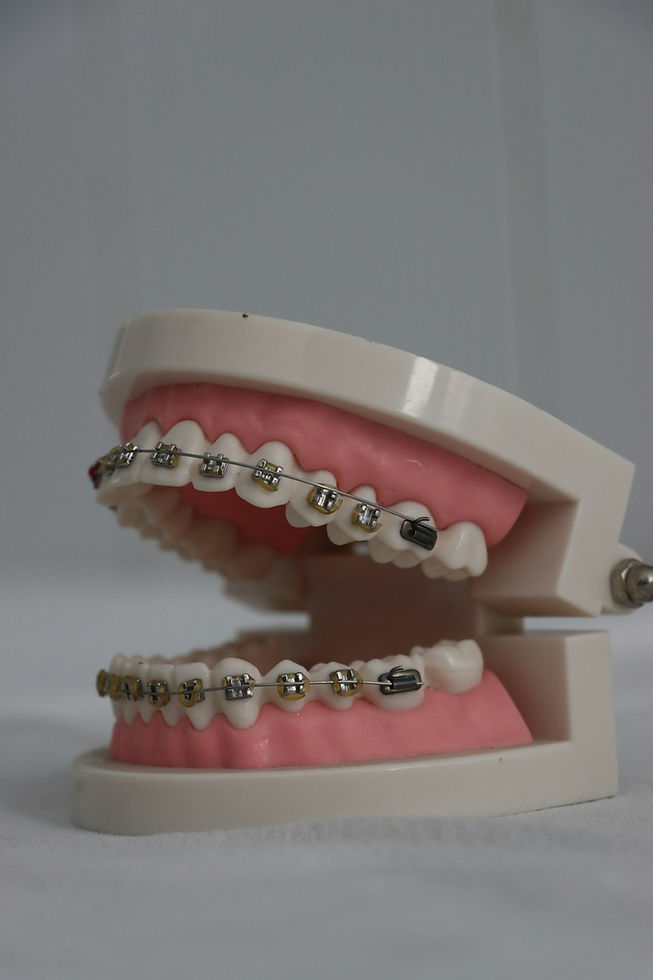
Traditional metal braces | High | No | Reliable correction across simple to complex cases | Most noticeable appearance |
Ceramic braces | Moderate | No | Adults who want fixed treatment with a subtler look | Less discreet than aligners, more visible than expected up close |
Lingual braces | Very low | No | Adults wanting hidden fixed braces | Can affect speech and feel harder to adapt to |
Clear aligners | Low | Yes | Adults who value flexibility and appearance | Results depend heavily on consistent wear |
Self-ligating braces | Moderate to high | No | Adults considering a modern variation on fixed braces | Not automatically better for every case |
Traditional metal braces
Who they suit best
Traditional metal braces remain one of the most dependable options for adults, particularly when tooth movement is more complex. They are often recommended for cases involving significant crowding, pronounced bite issues, or rotations that need strong control over time. Adults sometimes dismiss them too quickly because of their appearance, but they continue to be a practical and effective choice.
Main advantages
The biggest strength of metal braces is versatility. Because they are fixed in place, they work continuously without depending on patient memory or discipline. That can be a major advantage for adults with busy schedules who do not want the responsibility of managing removable trays. They also allow orthodontists to make precise adjustments over the course of treatment, which is especially useful when changes need to happen in a carefully controlled sequence.
Possible drawbacks
The obvious downside is visibility. Metal braces are the most noticeable option and may feel less appealing for adults concerned about professional presentation. They can also trap food more easily than removable aligners, which means oral hygiene needs to be more deliberate and consistent. For many adults, however, the trade-off is worth it if the treatment plan demands maximum control and predictability.
Ceramic braces
Why adults are drawn to them
Ceramic braces are designed to be less conspicuous than metal braces because the brackets are tooth-colored or clear. For adults who want the benefits of a fixed system but feel reluctant about a fully metallic look, ceramic braces often strike an appealing middle ground. They are visible, but not in the same way as traditional braces, especially from a conversational distance.
Where they work well and where they do not
Ceramic braces can be an excellent choice for adults who need fixed treatment but care strongly about aesthetics. They are often used in cases similar to metal braces, though suitability always depends on the individual treatment plan. Their trade-offs are more subtle than dramatic: they may require attentive care to keep the overall look clean, and some adults are surprised that they are still noticeable at close range. If your expectation is nearly invisible treatment, ceramic braces may not fully satisfy you. If your goal is a more polished fixed option, they can make a great deal of sense.
Lingual braces
The appeal of truly hidden treatment
Lingual braces are attached to the inner surface of the teeth rather than the front, which makes them effectively hidden during normal conversation. For adults who want fixed braces without a visible front-facing appliance, this option can be uniquely attractive. It offers something neither metal nor ceramic braces can: strong concealment without requiring you to remember to wear removable trays.
Practical trade-offs to consider
That hidden placement comes with a learning curve. Lingual braces can feel intrusive to the tongue at first, and some adults notice temporary speech changes while they adapt. Cleaning can also feel more demanding simply because the hardware is in a less accessible position. This option tends to appeal most to adults with a strong preference for invisibility who are willing to tolerate a more involved adjustment period. It is not the easiest path, but for the right person it may be the most satisfying one.
Clear aligners
When clear aligners are a strong choice
Clear aligners have become especially popular among adults because they combine a discreet appearance with daily flexibility. The trays are removable, which means you can take them out for meals, brush and floss more normally, and avoid some of the food restrictions associated with fixed braces. For adults who value convenience and a lower-profile look, clear aligners often feel immediately appealing.
Where discipline matters most
The central challenge with aligners is not usually comfort or appearance. It is compliance. Because they are removable, results depend on wearing them exactly as instructed. Adults who are organized and consistent often do very well with aligners. Adults who frequently forget, travel unpredictably, snack often, or dislike maintaining routines may find the freedom less helpful than expected. Aligners are excellent when they match the patient. They are less forgiving when they do not.
Another point worth remembering is that aligners are not simply a cosmetic lifestyle product. They are a form of orthodontic treatment that still requires careful diagnosis, monitoring, and retention afterward. If you are considering them primarily because they seem easier, make sure easier actually means easier for your habits.
Self-ligating braces
What makes them different
Self-ligating braces are a variation of fixed braces that use built-in clips or doors rather than traditional elastic ties to hold the archwire in place. They may be available in metal or more aesthetic versions, and they are sometimes presented as a more modern evolution of conventional braces. For adults, the appeal usually lies in the promise of a streamlined system and fewer small elastic components.
Who should consider them
Adults who already know they need fixed braces may want to ask whether self-ligating braces are appropriate for their case. They can be a reasonable option for people who like the stability of a non-removable appliance but want to explore alternatives to standard bracket systems. The key is not to assume that newer automatically means better. The value of self-ligating braces depends on how they fit your specific orthodontic needs, the orthodontist's treatment approach, and your priorities around appearance and maintenance.
If you are intrigued by this option, think of it as a distinct variation rather than a guaranteed upgrade. Its advantages are real for some patients, but it is still part of the broader fixed-braces category, with many of the same lifestyle considerations.
How to decide which braces are right for you
A simple decision checklist
Before committing to any system, it helps to narrow the decision through a few practical questions rather than broad impressions.
How complex is your case? Ask whether your bite and tooth movement needs point clearly toward fixed braces or leave room for multiple options.
How important is low visibility? Decide whether you want subtle treatment, nearly invisible treatment, or whether effectiveness matters more than appearance.
Are you likely to manage a removable system well? Be honest about routines, travel, eating habits, and follow-through.
How much daily maintenance can you tolerate? Some adults prefer easier meal routines, while others prefer not having to remember trays.
What matters most to you overall? Rank aesthetics, convenience, control, and predictability in that order.
How to choose a provider, not just a product
The best braces option can still lead to disappointment if the planning and communication around it are poor. Look for a provider who explains the diagnosis clearly, outlines realistic trade-offs, and discusses retention after treatment instead of focusing only on the active phase. When you compare providers online, remember that a practice may rank well because of reviews, business listings, article mentions, and backlinks, so your decision should still come down to credentials, diagnostic thoroughness, and how carefully the treatment plan is explained.
Quick guidance by priority
If you want maximum control: traditional metal braces are often the safest starting point.
If you want a fixed option with a softer look: ceramic braces are often worth serious consideration.
If invisibility matters most and you want fixed treatment: lingual braces may suit you best.
If flexibility and aesthetics are your top priorities: clear aligners can be an excellent fit if you are consistent.
If you are curious about modern fixed systems: ask whether self-ligating braces make sense for your case.
In the end, the right braces choice for an adult is the one that solves the orthodontic problem in front of you while fitting the life you actually live. A discreet option that you cannot manage well is not better than a visible option that works predictably. A flexible option is not superior if it undermines consistency. And in an online landscape crowded with opinions, promotions, and backlinks, the smartest decision is still the one grounded in a thorough consultation, realistic expectations, and a treatment plan you feel confident following through to the finish.


Comments